



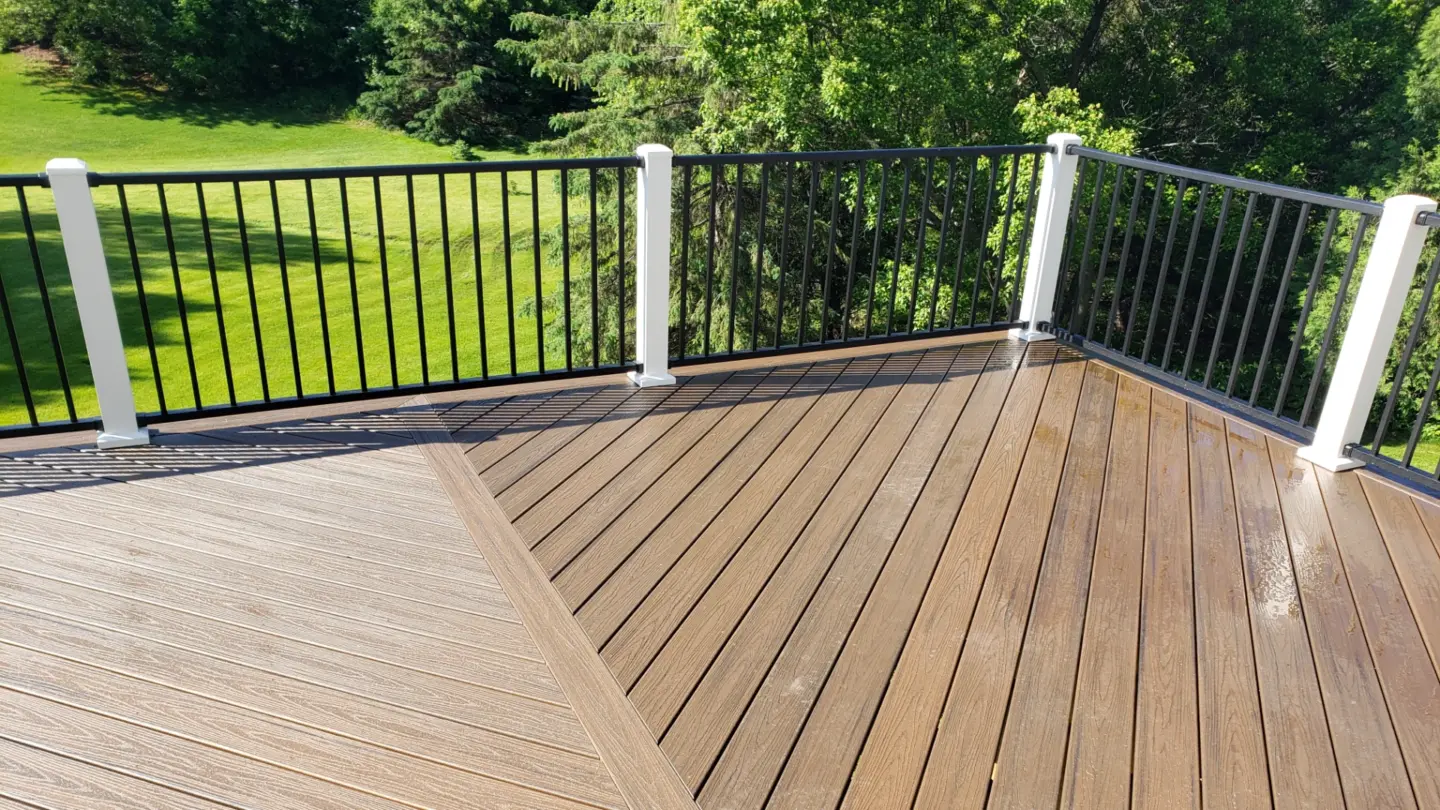
Custom is one of those words that gets used so loosely in home improvement that it’s almost lost its meaning. Every contractor claims to do custom work. Every brochure promises a tailored experience. But when you start actually pricing decks in Huntingtown, you quickly realize that what one builder calls custom another would call standard with a few options.
So what does a real custom deck builder actually involve? And how is it different from a builder grabbing a stock plan and adjusting the dimensions?
This guide walks through what genuine custom deck design looks like from the homeowner’s side, what questions get asked, what decisions get made, and what the planning process should feel like before a single board is cut. If you’re considering a new deck for your Huntingtown home, knowing this in advance will help you spot the difference between true custom work and a builder who’s just changing the size of a template they’ve used a hundred times before.
The Difference Between Custom and Customized
Let’s get this distinction out of the way first because it matters.
A customized deck takes a standard plan and adjusts a few variables. The shape might be slightly different. You picked your decking color. Maybe the railing style is one of three options the builder offers. The bones of the project are familiar territory for the builder, and you’re choosing from a pre-defined menu.
A custom deck builder starts with your house, your lot, your lifestyle, and your goals, and designs something specifically for that combination. The shape isn’t pulled from a template. The dimensions come from how you actually plan to use the space. Material choices are matched to your home’s architecture rather than to whatever the builder stocks. The structural design accounts for the specific challenges of your site rather than a generic approach.
Both can produce good results. But they’re priced differently, they take different amounts of time, and they deliver dramatically different end products. Knowing which one you’re actually getting is the first step in any serious deck conversation.
What Real Custom Design Looks Like in Huntingtown
Genuine custom design starts with discovery, not measurements.
A good custom builder will spend the first conversation asking about how you live. Do you entertain often, or is this primarily a family space? Do you cook outside? How many people do you typically host? What time of day will the deck get the most use? Are there sight lines from inside the house that should be preserved or framed? Do you have kids or pets? Future plans (a hot tub, an outdoor kitchen, eventual screened-in conversion) that should be accommodated even if they’re not immediate?
Then comes the site analysis. This is where local knowledge matters. Huntingtown sits in a part of Calvert County with specific characteristics that affect deck design. Lot sizes that often allow for generous deck footprints. Mature tree canopy on many properties that affects sun exposure and where shade falls throughout the day. Soil conditions that range from sandy to heavy clay depending on where you are. Setback requirements and lot configurations that influence what’s possible legally as well as practically.
A custom builder takes all of that into the design rather than designing first and adjusting later.
The Design Phases
Most quality custom deck projects move through a recognizable sequence of stages. Knowing what each one involves helps you understand what you’re paying for and what to expect.
Initial consultation
This is the discovery conversation. Your goals, your budget range, your timeline, your aesthetic preferences. A good builder is taking notes and asking follow-up questions, not pitching products. By the end of this meeting, you should have a clearer sense of what’s possible on your property and a rough sense of where pricing might land based on the scope you’re describing.
Site evaluation
The builder visits your property. Measurements happen, but so does observation. Where does the sun hit at different times of day? Where does water drain when it rains? How does the existing house relate to the yard, and where are the natural transition points? What’s the soil like at the proposed deck location? Are there underground utilities, septic fields, or grading issues that constrain the design?
Conceptual design
This is where the actual custom work begins. You’ll see initial concepts (sketches, rough 3D renderings, or detailed plan views depending on the builder) that show possible deck layouts based on the discovery work. Good custom builders typically present multiple options here, each with different trade-offs in cost, complexity, and how they use the space. You’re not just picking a shape. You’re starting to see how design choices flow from how you actually plan to live in the space.
Refinement
Based on your feedback, the design gets refined. Levels might shift. Stairs relocate. A pergola gets added or removed. The kitchen area expands. This phase often involves several rounds of revision and is genuinely collaborative when done well.
Material specification
Once the design is solid, material selection begins in earnest. Decking type, railing system, fastener choices, lighting, accessories. This isn’t a quick decision in a custom build because the materials should match both the design intent and the practical realities of your home and budget.
Detailed plans and engineering
The final design gets formalized into plans suitable for permitting and construction. In Maryland, deck permitting requires specific structural calculations and code compliance documentation, and custom designs often need more detailed engineering than stock plans because the structural systems are unique.
Permitting
Calvert County has its own permit process, and Huntingtown projects need to comply with both county requirements and any applicable state regulations. A good builder handles this on your behalf and accounts for it in the timeline.
Pre-construction walk-through
Before work begins, you should walk the project with your builder one more time. Final material selections confirmed, layout marked on the ground, expectations aligned on schedule and communication.
Where Custom Design Pays Off the Most
Some projects benefit enormously from custom design. Others wouldn’t see a meaningful difference. Knowing the difference helps you decide where to invest.
Complex lots
Sloped properties, mature trees, irregular shapes, walkout basements, multiple grade changes. The more complex the site, the more value custom design adds because templates can’t accommodate the complexity well.
Multi-level designs
Anytime your deck involves multiple levels (a main entertaining level, a step-down dining area, a transition to a pool deck or patio below), custom design matters because the transitions are where templates fail.
Integration with other outdoor features
If your deck connects to a pool, an outdoor kitchen, a screened porch, a gazebo, or extensive landscaping, custom design ensures everything works together rather than feeling like separate projects assembled next to each other.
Older homes with distinctive architecture
Huntingtown has a mix of newer construction and older homes with real character. Custom design matches the deck to the home’s architecture rather than imposing a generic look on a unique house.
Specific lifestyle requirements
Outdoor cooking enthusiasts, frequent entertainers, families with young children, dog owners with specific needs. Custom design accounts for how you actually live.
For straightforward rectangular decks on flat lots attached to newer homes, customized (rather than fully custom) work often delivers the right balance of personalization and cost. There’s no shame in that. The honesty is in knowing which you’re getting and paying accordingly.
What Custom Costs and Why
Custom deck design costs more than template work. That’s not surprising, but the reasons are worth understanding.
The design time itself is real labor. Multiple concepts, site analysis, revisions, detailed plans, and engineering all take hours that get billed somewhere. Some builders charge separately for design and then credit it toward construction. Others fold it into the total project cost. Either approach can be fair as long as it’s transparent.
Material flexibility costs more too. A builder who only works with one or two decking brands gets pricing advantages but limits your options. A custom builder who specs whatever material is right for your project pays more per board but matches the material to the design rather than the other way around.
Construction itself takes longer on truly custom builds because unique designs require unique solutions. A standard rectangular deck on a simple foundation goes up fast. A multi-level deck with custom railings, integrated lighting, and a specialized substructure on a sloped lot takes meaningfully more time.
The trade-off is value over time. A well-designed custom deck adds more to a home’s livability and resale appeal than a generic one. And done right, it lasts longer because the design accounts for the specific stresses of your site.
Ready to Start a Real Custom Deck Builder?
Custom deck design is genuinely different from stock work, and the planning process is where most of the value gets created. Done right, the construction phase becomes almost predictable because so much thinking happened before the first cut.
Park Place Construction designs and builds true custom decks for Huntingtown and the surrounding Calvert County area, with a planning process that takes your home, your lot, and your lifestyle seriously from the first conversation forward. Call us at +1 443-968-2327 to start planning a deck designed specifically for the way you actually live.
Questions to Ask That Reveal Whether It's Really Custom
A few questions will quickly tell you whether you’re talking to a true custom builder or someone who uses “custom” as a marketing word.
Can you show me three different layout options before we commit to a direction?
Custom builders develop multiple concepts. Template builders give you one design and adjust dimensions.
How do you determine the structural design for my specific site?
The answer should reference soil conditions, the specific load requirements of your design, and how the framing approach is chosen for your project rather than a standard approach the builder uses on everything.
What's your process for matching the deck to my home's existing architecture?
Custom builders think about how the deck visually integrates with your home. Template builders pick from whatever railing and decking colors they stock.
Can you walk me through the permitting process for Calvert County?
Local experience matters. A builder who handles Huntingtown permits regularly will give you a confident, specific answer. One who doesn’t will be vague.
How are change orders handled if I want to adjust something mid-project?
Real custom builders have clear, fair change order processes because they expect collaboration. Template builders sometimes make changes painful because their workflow assumes you won’t ask for any.