



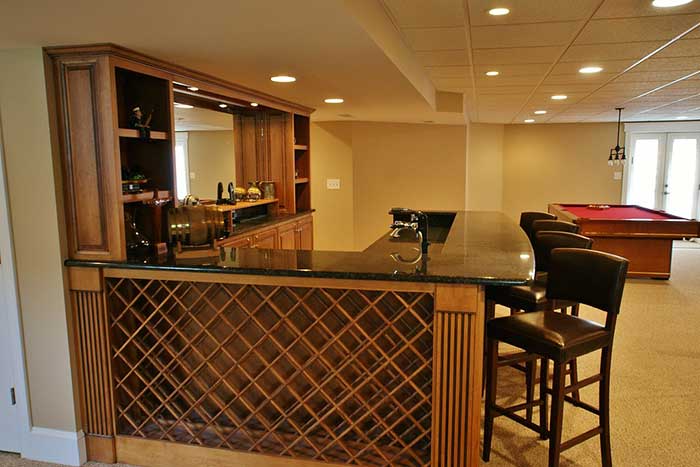
A basement finishing project is one of the few home improvements where the space already exists and the whole job is turning it into something you can use. That makes it feel simpler than an addition, and in some ways it is. But a basement sits below grade, which brings its own set of steps that a room upstairs never deals with. Knowing the sequence ahead of time makes the whole thing easier to plan around. Here is what a finished basement company actually does from the first visit to the last walkthrough.
It Starts With an Honest Assessment of the Space
The first step is a consultant coming out to look at what you have. That visit is where the real conversation happens, because a basement is not a blank room. The consultant looks at the ceiling height, the existing mechanicals, where the water and drainage sit, and what the space can realistically become. A good finished basement company gives you an honest read here rather than selling you the biggest possible project. If the layout supports an in-law suite, a home office, or a media room, this is where you find out. If something needs to be handled first, you find that out too, before any money is committed.
Moisture Gets Handled Before Anything Else
This is the step that separates a basement done right from one that causes problems in two years. Below-grade space deals with humidity and the risk of water intrusion in a way no upstairs room does, so moisture conditions and drainage get assessed before any finish work begins. Water issues get addressed first, then vapor barriers and insulation go in, ventilation gets planned, and moisture-resistant materials get used where they belong. Skipping this is how basements end up with mold and warped flooring. Doing it first is how a finished basement stays finished. If a contractor wants to start hanging drywall before talking about moisture, that is the wrong contractor.
Permits and Planning Come Next
Once you approve the estimate, the paperwork and coordination move to the contractor rather than landing on you. Park Place handles all permits and coordinates with local authorities, which matters in a basement because finishing one usually pulls in several trades at once. A finished basement almost always involves electrical, plumbing, HVAC, and insulation, and each of those has its own code requirements and inspections. Having one company manage the permits and the scheduling is what keeps those pieces from colliding. You approve the plan, and the sequencing becomes their job.
The Mechanical Work Happens Behind the Walls
Before the space starts looking like a room, the systems that make it livable go in. Insulation, HVAC, electrical, plumbing, and lighting all get installed and planned around airflow, energy efficiency, and code compliance. This is the unglamorous middle of the project where not much looks finished, but it is the part that determines whether the space is actually comfortable to sit in year-round. A basement with good insulation and proper ventilation holds temperature and stays dry. One where the mechanicals were an afterthought never feels quite right no matter how nice the flooring is.
Then It Starts Looking Like a Room
Once the systems are in and inspected, the finishes go on and the space transforms quickly. Walls get framed and painted, and flooring goes down, whether that is vinyl, LVP, carpet, tile, or wood depending on how the room will be used and how you want it to feel. This is the stage where the plan you talked about on day one becomes visible. Whatever the room is meant to be, a guest suite, a home gym, a workshop, a playroom, or a home theater, the layout, lighting, and finishes get tailored to that purpose rather than dropped in as a generic finished box.
You Get Regular Updates, Not Silence
Throughout the build, a good contractor keeps you informed rather than going quiet after the deposit clears. The crews work through the project with attention to detail and clean up at the end of each day, and you should know what is happening at each stage. That communication matters more on a basement than people expect, because a lot of the work is hidden behind walls, and you want to trust that the parts you cannot see were done correctly.
It Ends With a Walkthrough
The project is not finished when the crew leaves. It is finished when you walk the space with the contractor and confirm the work is right. That final walkthrough is where anything outstanding gets caught and handled before the job is called complete. A finished basement company that stands behind its work treats that step as part of the job, not a favor.
Ready to Put That Space to Work
If your basement has been sitting empty and you want an honest read on what it could become, the first step is a free estimate and an on-site look. Call Park Place at (443) 968-2327 or visit 3930 Park Pl, Huntingtown, MD 20639 to get started.